
In the face of global disruptions, geopolitical tensions and rising demand for energy, CRES Forum hosted a discussion entitled “Strengthening Supply Chains: Policies to Bolster National Security & Domestic Manufacturing.” Bringing together top government and industry voices, the discussion explored the need for federal policies to support accelerated investments in our energy supply chains.
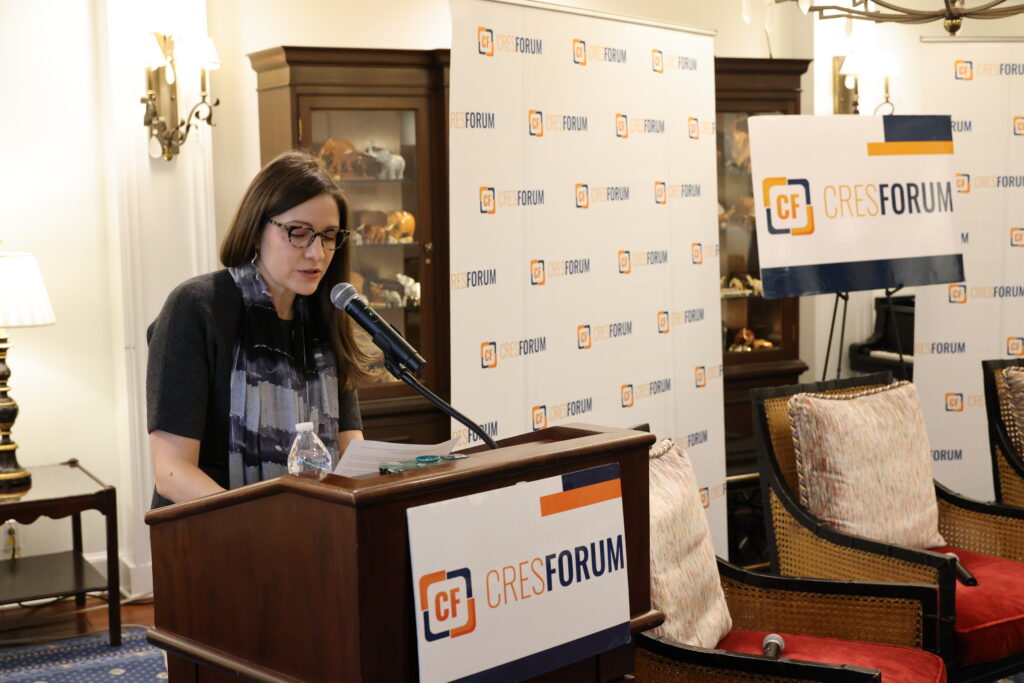
CRES Forum Director of Policy Rebecca Lorenzen opened the evening with brief remarks, noting this conversation comes at an important time for U.S. energy and national security, particularly as current geopolitical conflicts and associated global supply chain disruptions have highlighted the risks of overreliance on competitors for critical resources. She also introduced the evening’s armchair and panel discussions, as well as the experts joining each.
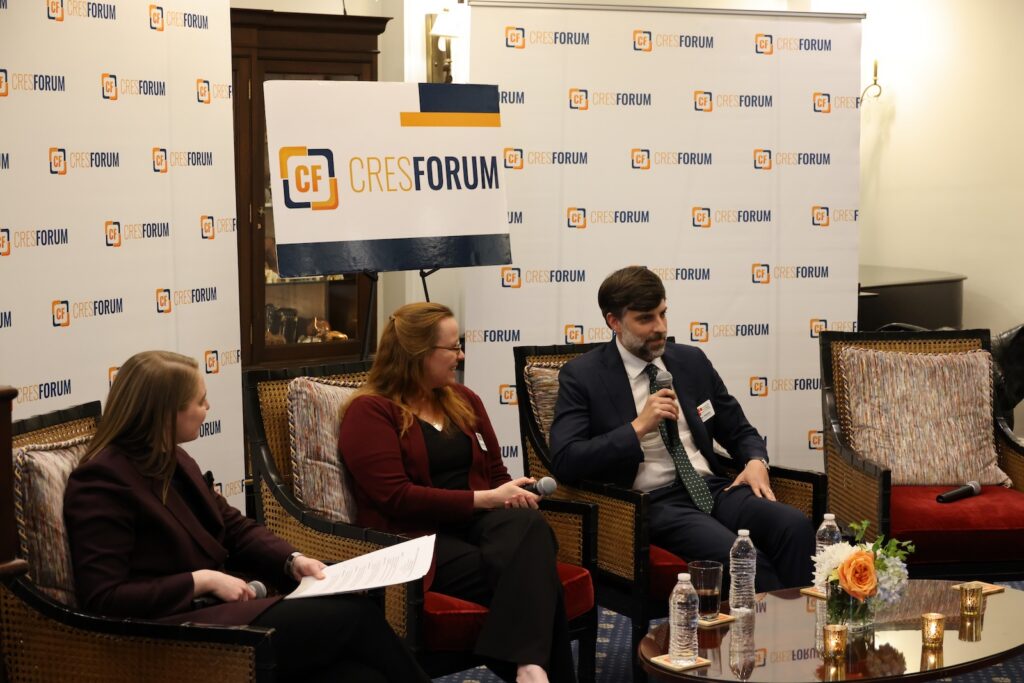
CRES Forum Senior Vice President Christina Baworowsky continued the programming by moderating a discussion highlighting recent actions from the U.S. Department of Energy (DOE) to prioritize and invest in advanced manufacturing and critical minerals. Joining Baworowsky for this panel were Chelsea Sexton, Manufacturing and Transportation Tech Sector Lead, Energy Dominance Financing (EDF) at DOE, and Max Slaiman, Critical Minerals and Materials Tech Sector Lead, EDF at DOE.
Sexton discussed the strong investments DOE is making in U.S. advanced manufacturing to ensure supply chains are strengthened and the country stays ahead of competitors. Slaiman spoke on the challenges to critical mineral extraction and processing and noted the importance of securing U.S. supply chains and resources.
Following remarks from DOE experts, industry energy leaders Roger Martella, Chief Corporate Officer at GE Vernova; Jackie Siebens, Vice President of Public Affairs at Helion Energy; and Tina Jeffress, Group Manager, Sustainability & Energy at Panasonic North America, joined Baworowsky for the second panel. This panel focused on efforts to keep the U.S. competitive on the global stage and the federal policies necessary to ensure that success.
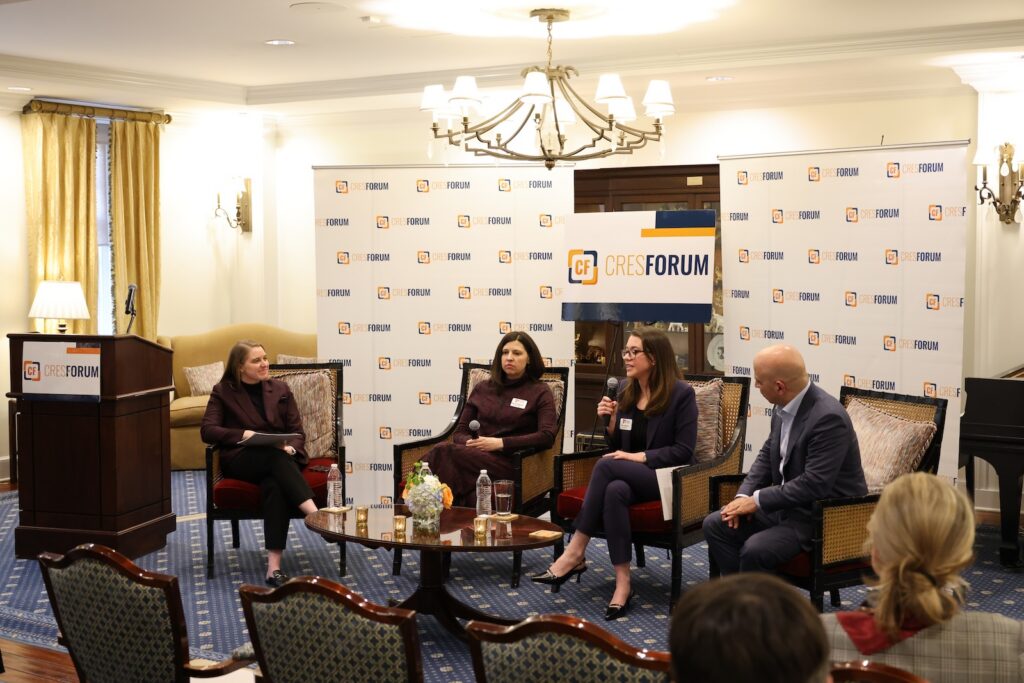
Martella spoke to the impacts on business certainty in clean energy development and noted the need for policy durability and consistency amid changing political control in Washington. Siebens discussed the excitement and importance of fusion energy, especially in the wake of Helion Energy’s newest prototype success reaching 150 million°C, the hottest ever for any fusion startup. Jeffress noted the importance of innovation in the workforce, including using AI to troubleshoot machinery malfunctions and strengthen workforce development.
All panelists spoke to the need to further educate Capitol Hill on protecting tax credits, like the 45X Advanced Manufacturing Production Credit, that bolster clean energy projects and make it possible the U.S. to stay competitive with its adversaries.

CRES Forum is proud to partner with government and private sector clean energy experts who are working to ensure U.S. energy dominance through smart policy that fosters economic growth, strengthens supply chains and supports innovation amid global disruptions and rising demand.
If you are interested in working with the CRES Forum team, please contact CRES Forum’s Vice President of External Affairs, Angela Chiappetta at [email protected]