
On Oct. 14, CRES Forum partnered with Heatmap News to host “Heatmap in D.C.: The Energy Capital Boom,” an evening at the Arlo Washington D.C. bringing together energy executives, financiers and policymakers to discuss what it takes for energy projects to be financed and built. The backdrop was rising electricity demand, shifting tax incentives and the Bipartisan American Affordability and Jobs Act (BAAJA), the permitting reform bill awaiting a Senate vote.
What Can Be Built
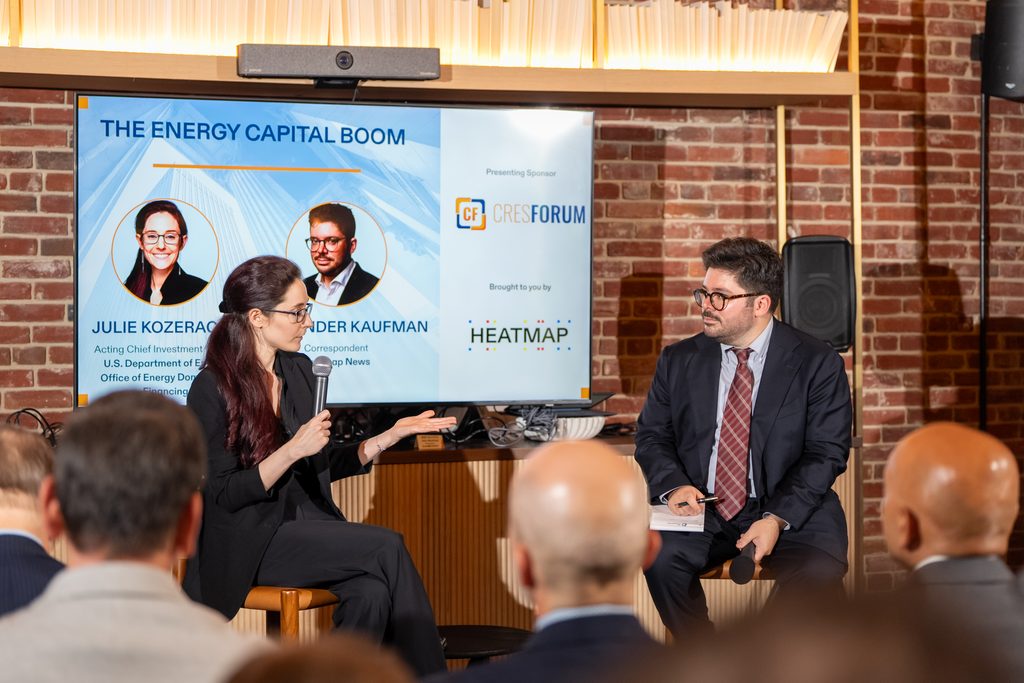
The program opened with Julie Kozeracki, acting chief investment officer of the Department of Energy’s Office of Energy Dominance Financing, in conversation with Heatmap correspondent Alexander Kaufman. Kozeracki said the office has made more than $67 billion in conditional commitments and financial closes over the past 12 months. The portfolio includes a $26.5 billion loan to Southern Company spanning nuclear, hydropower, transmission, storage and natural gas, and a $17.5 billion conditional agreement to finance long-lead-time components for up to 10 new AP1000 nuclear reactors. Looking ahead, she described a future with nuclear east of the Mississippi and geothermal in the West.
Structuring the Deal
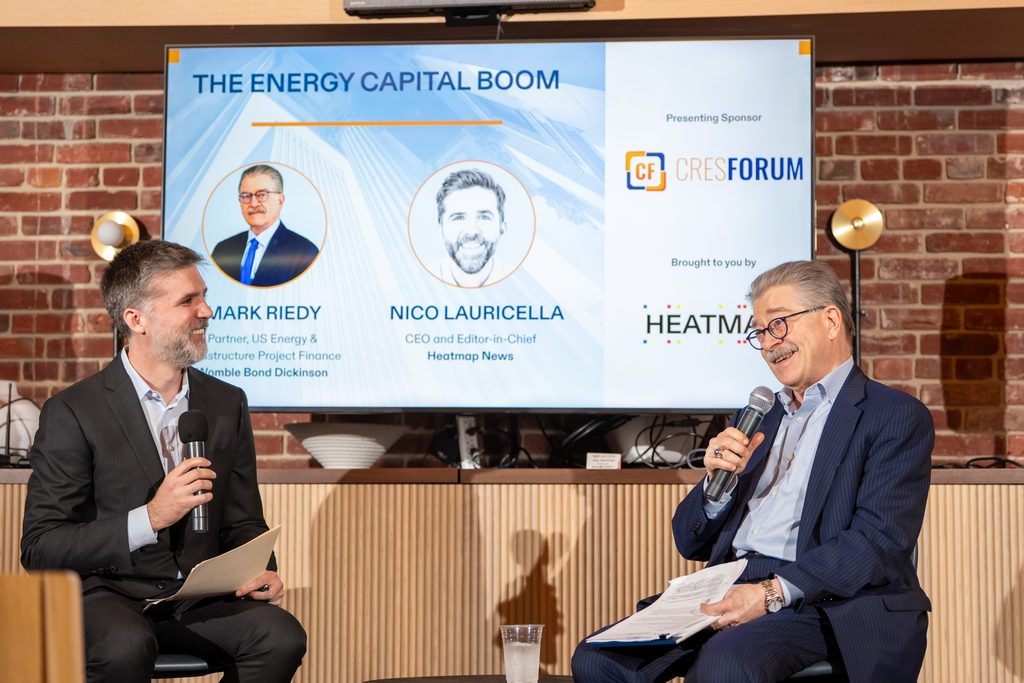
CRES Forum Board Member Mark Riedy, a partner in Womble Bond Dickinson’s U.S. Energy and Infrastructure Project Finance practice, joined Heatmap editor in chief and CEO Nico Lauricella to walk through how energy deals come together. Riedy explained what a first commercial project needs: a pilot, a demonstration or a short operating history showing the project can scale, followed by engineering and feasibility studies that become part of the underwriting package for lenders and investors. Lenders also need predictable revenue streams, he said, and developers should start the interconnection process early.
He then discussed how the 2025 tax law reshaped federal credits, preserving them for storage, nuclear, hydropower and geothermal while tightening the path for solar and wind, and said he is watching for a possible extension in the lame duck session and in a tax bill next year.
Where Institutional Capital Goes Next
The evening closed with Daniela Shapiro, co-chief risk officer at HASI, which invests mostly in operational projects developers have already moved through the permitting process. Shapiro said she does not see an investment cliff ahead, pointing to demand from hyperscalers and an electrifying economy accelerating the pipeline of projects, and said meeting it will take an all-of-the-above approach. She also described two shifts she has watched: the language of the energy transition giving way to energy acceleration, and local backlash moving largely from renewable projects to data centers.

CRES Forum is grateful to Heatmap News for hosting and to each of the speakers for a substantive conversation.