
Nearly every sector of the American economy relies on liquid, solid or gaseous fuels—from transportation, agriculture and manufacturing, to aviation and defense. Today these sectors are powered by a mix of American-produced fuels, including petroleum products, biofuels and natural gas, and the range of options continues to grow.
Maintaining and further expanding a diverse domestic fuel supply will be essential to strengthening economic resilience, supporting energy security, and increasing consumer choice, particularly as recent geopolitical conflicts have underscored the risks over-reliance on foreign supply chains. An all-of-the-above approach to fuels can help ensure the U.S. continues to benefit from its diverse resource base while maintaining reliable and affordable energy choices for consumers and industry.
I. The Fuels That Power America Today
Petroleum products and natural gas dominate today’s energy mix—accounting for over 84% of liquid, solid or gaseous fuel consumption across the residential, commercial, industrial, transportation and electric power sectors (Figure 1). The U.S. fuel landscape is actively evolving, however, and new innovative technologies continuously expand America’s fuel options.
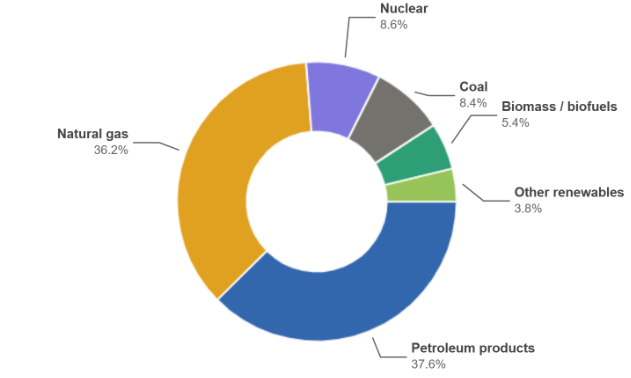
Figure 1. U.S. Primary Energy Consumption by Fuel, All Sectors, 2024 (trillion Btu)
Source of data: U.S. EIA, Monthly Energy Review, Tables 2.2–2.6, February 2026 release. Sectors included are residential, commercial, industrial, transportation, and electric power. The “Biomass / biofuels” category is predominantly ethanol, biodiesel, and renewable diesel. Petroleum excludes biofuels. “Other renewables” includes conventional hydroelectric, geothermal, solar, and wind.
Petroleum-derived fuels—gasoline, diesel, jet fuel and others—remain the largest source of energy for the transportation sector, powering passenger vehicles, freight trucks, ships, aircraft, and military operations. The U.S. overtook Russia and Saudi Arabia1 in the 2010s as the world’s largest oil producer, and domestic petroleum production remains a key component of U.S. energy security.
Natural gas is used extensively for power generation, heating, and industrial processes, and serves as an important feedstock for products such as hydrogen, ammonia, and petrochemicals. The U.S. is also the world’s largest natural gas producer and leading LNG exporter,2 supporting America’s competitiveness abroad while providing affordable energy for millions of American households and businesses.
Biofuels—including ethanol, biodiesel, and renewable diesel—are produced from biological materials such as corn, soybeans, vegetable oils, and animal fats. They are primarily used in transportation, often blended with gasoline or diesel. The most common blends are E10 and E15 gasoline, along with biodiesel blends like B5 and B20, which are widely used in agricultural equipment and heavy-duty vehicles. Biofuel production creates significant demand for agricultural products such as corn and soybeans: about 40% of corn produced in the U.S is used for ethanol and related co-products,3 supporting farm income and rural economies.
II. Advanced and Next-Generation Fuels
New and innovative technologies are broadening the U.S. energy portfolio, expanding fuel choices, and creating opportunities for American industry and agriculture. Many of these fuels are also the focus of growing global competition, as countries invest in these technologies to supply future energy markets.
Global demand for fuels like low-carbon hydrogen and ammonia is growing, as countries like Japan and South Korea invest in these fuels to decarbonize industry, power generation, and transportation. China is moving aggressively to dominate hydrogen electrolyzer and fuel-cell technologies; and Europe has set ambitious hydrogen deployment targets. This creates new opportunities for U.S. producers in emerging global fuel markets.
Hydrogen can be produced from a variety of domestic resources, including natural gas, electricity, and biomass. Today it is used mainly in refining and fertilizer production, but new applications are being developed to use hydrogen in heavy industry, shipping, power generation, and other hard-to-electrify sectors such as steelmaking. The U.S. currently has the largest production capacity of blue hydrogen (produced from natural gas with carbon capture), while China leads in electrolytic hydrogen (produced by splitting water into hydrogen and oxygen with an electrolyzer).4
Ammonia, made from hydrogen and nitrogen, is currently used primarily for fertilizer manufacturing. Low-carbon ammonia is gaining attention as a potential fuel for shipping and power generation, as well as an energy carrier for hydrogen, given that it is easier to transport and store.
Advanced biofuels draw mostly on waste and non-food feedstocks such as crop residues, wood, algae, and used oils and fats. These fuels include cellulosic ethanol, renewable diesel, and other next-generation biofuels that can often be utilized, either as blends or drop-in fuels, in existing engines and fuel systems.
Synthetic fuels are liquid fuels made by chemically converting carbon-containing feedstocks (such as biomass, natural gas, or captured CO2) into hydrocarbons rather than refining crude oil. Pathways include e-fuels (using electrolytic hydrogen and CO₂), biomass-to-liquid fuels (which are advanced biofuels) made from crop residues or waste, and gas-to-liquid fuels made from natural gas. Because these fuels can be used in existing engines and fuel systems, they are being explored for aviation, shipping, and other sectors where liquid fuels remain difficult to replace.
Sustainable Aviation Fuel (SAF) is a category of jet fuel that can be made using several different production pathways, including advanced biofuels and synthetic e-fuels. SAF can be blended with conventional jet fuel in existing aircraft. Because aviation is difficult to electrify, SAF is one option the aviation sector is exploring to meet future fuel demand. Early commercial use is underway through demonstration flights and low-percentage blends on select routes, though costs and feedstock availability remain near-term challenges.
III. Supportive Policies that Advance American Fuels
A wide range of federal and state policies support the production, transportation, and use of fuels in the United States, applying across both conventional and next-generation fuels. They take many forms, from tax incentives and agricultural programs to leasing rules, infrastructure permitting, and federal demonstration programs. The list below highlights selected examples relevant to maintaining a diverse and competitive domestic fuel supply.
Tax Credits and Incentives
Federal tax provisions support investment in a range of fuel technologies, from conventional energy production to emerging low-carbon fuels.
- Incentives such as the Section 45Q carbon capture credit, the 45V clean hydrogen production credit, and the 45Z clean fuel production credit (all modified under the One Big Beautiful Bill Act, or OBBBA) are designed to accelerate the development of new energy technologies, strengthen domestic manufacturing, and improve U.S. competitiveness as other countries implement their own supportive policies.
- Other provisions in the tax code support domestic oil and gas production, refining, and infrastructure investment, reflecting the continued importance of conventional fuels to the U.S. economy.
Agriculture and Biofuel Programs (Farm Bill)
Farm Bill energy and agriculture programs play a major role in supporting fuel production, particularly for ethanol, biodiesel, and other biofuels.
- Programs such as the Biomass Crop Assistance Program (BCAP), Bioenergy Program for Advanced Biofuels, Biorefinery, Renewable Chemical, and Biobased Product Manufacturing Assistance Program, and the Rural Energy for America Program (REAP) support feedstock production, biofuel facilities, and rural energy projects.
- Crop insurance and commodity programs that stabilize farm income and manage price and yield risk also help maintain crop feedstocks underpinning biofuel production.
Permitting, Energy Infrastructure, and Regional Development
Comprehensive permitting reform can create more predictable and efficient processes, improving access to reliable energy by accelerating the construction of the infrastructure needed to produce, transport, and use both conventional and next-generation fuels.
- Fuels of all types—including oil, natural gas, biofuels, hydrogen, and synthetic fuels—depend on pipelines, refineries, export terminals, storage facilities, and processing plants that require approvals from multiple federal and state agencies. Permitting reform to create predictable, efficient approval processes for energy infrastructure is critical to maintaining a reliable fuel supply.
- Projects such as pipelines, LNG export facilities, biorefineries, hydrogen and carbon capture systems, and fuel terminals can face lengthy reviews, overlapping jurisdiction, and inconsistent requirements. Improved coordination, clear timelines, and regulatory certainty could accelerate development of both conventional and next-generation fuel infrastructure, strengthening U.S. energy security and global competitiveness.
- Regional initiatives such as the Regional Clean Hydrogen Hubs program are intended to support the development of new fuel production and infrastructure across different parts of the country, helping emerging technologies reach commercial scale while leveraging private investment and regional energy resources.
Why an All-of-the-Above Fuel Strategy Matters
America’s energy strength comes from diversity—and maintaining an all-of-the-above fuel strategy will help ensure reliable, affordable, and secure energy for decades to come. From the cornfields supplying ethanol to the wells producing natural gas, from biorefineries processing waste oils into SAF to electrolyzers making clean hydrogen, the fuels of today and tomorrow are American-made—and the policy choices made now will determine how well-positioned the United States is to lead in the fuel markets of the future.