
Citizens for Responsible Energy Solutions (CRES) Forum was honored to join Rep. Gabe Evans (R-CO) on July 6th for a series of site visits and conversations in Colorado highlighting both the extraordinary innovation taking place across Colorado’s energy economy and the challenges America must address to meet rapidly growing electricity demand.
Strengthening the Security and Resilience of America’s Energy Systems
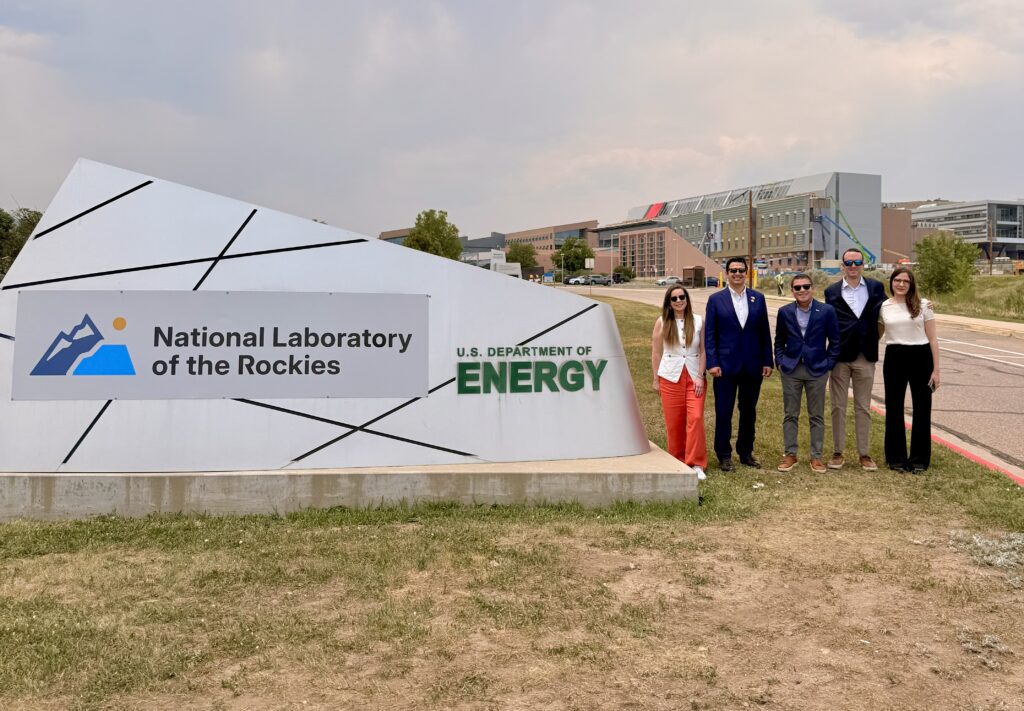
The day began at the National Laboratory of the Rockies (NLR) in Golden, Colorado. Overseen by the Department of Energy’s Office of Critical Minerals and Energy Innovation (CMEI), NLR is the Department’s lead national laboratory dedicated to critical minerals, energy innovation and energy security. The laboratory works to move technologies from foundational research toward practical application, with an emphasis on strengthening domestic supply chains, improving affordability, resilience and reliability and supporting American economic competitiveness.
That mission was evident throughout the visit.
The NLR team first demonstrated its “threat-to-consequence” platform, which models how hazards—including natural disasters and cyberattacks—could affect critical energy infrastructure and the communities that depend on it. Rather than examining a threat in isolation, the framework helps decision-makers understand its potential consequences for essential services and identify steps that can strengthen preparedness, response and recovery.
The demonstration underscored a fundamental point: energy security is not only about producing enough energy. It is also about ensuring that the systems delivering that energy can withstand disruption and recover quickly when disruptions occur.
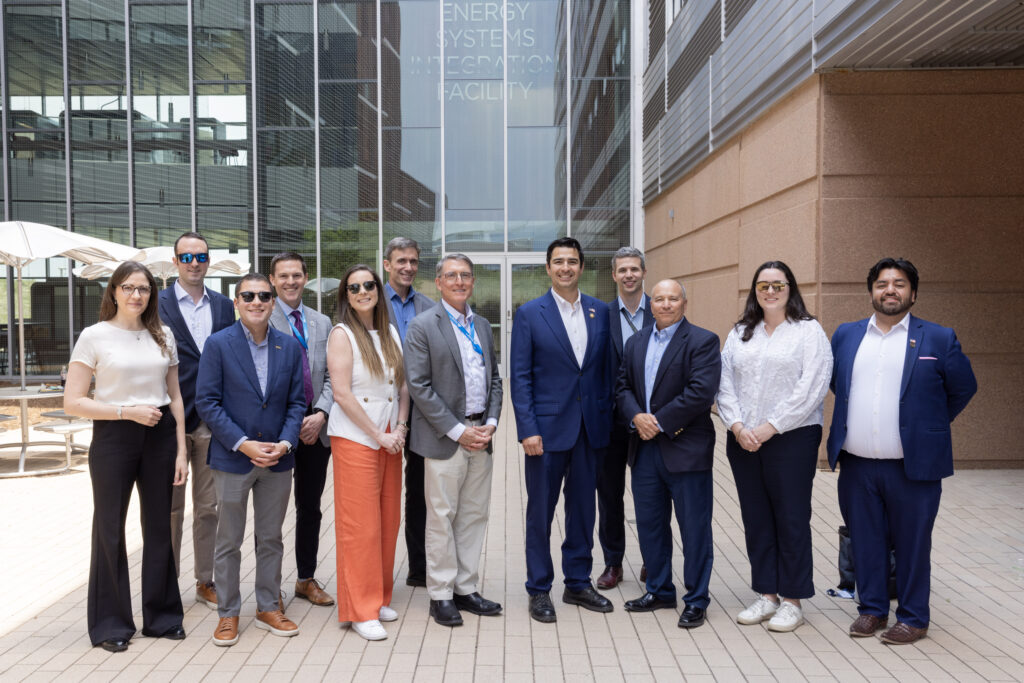
The group then visited the Energy Threat Analysis Center (ETAC), a public-private partnership that convenes experts from DOE and across the energy industry to identify, analyze and mitigate cyber threats to critical energy infrastructure. ETAC operates much like an energy-focused fusion center, bringing government and private-sector personnel together to share information and coordinate responses to emerging threats.
The visit came just days after the House of Representatives passed Rep. Evans’ bipartisan Energy Threat Analysis Center Act of 2026. The legislation would reauthorize and expand ETAC’s work and now awaits consideration in the Senate. Its broad bipartisan support reflects growing recognition that protecting the grid from increasingly sophisticated cyber threats requires sustained collaboration between government and the companies that own and operate much of America’s energy infrastructure.
The NLR tour also included a visit to Agora, a first-of-its-kind large-load test bed launched in May 2026, where researchers can recreate many of the technical conditions involved in connecting a major electricity user, such as a large-scale data center, to the grid. With artificial intelligence, advanced manufacturing and other energy-intensive industries driving significant new demand, test beds like Agora can help identify integration challenges, evaluate new technologies and explore how large loads can be connected without compromising reliability.
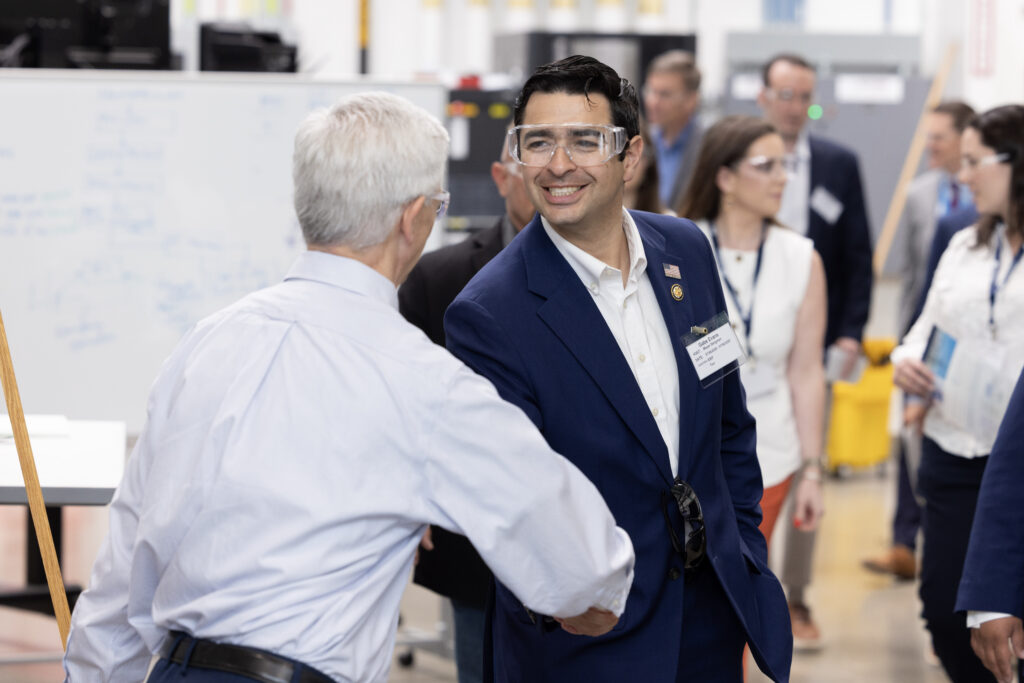
The visit concluded with a discussion of NLR’s geothermal research and its implications for national security and grid reliability. As a firm, always-available domestic resource, geothermal energy could play an increasingly important role in meeting rising demand—particularly as innovation expands the number of locations where geothermal resources can be developed.
Building Critical Technologies at Home
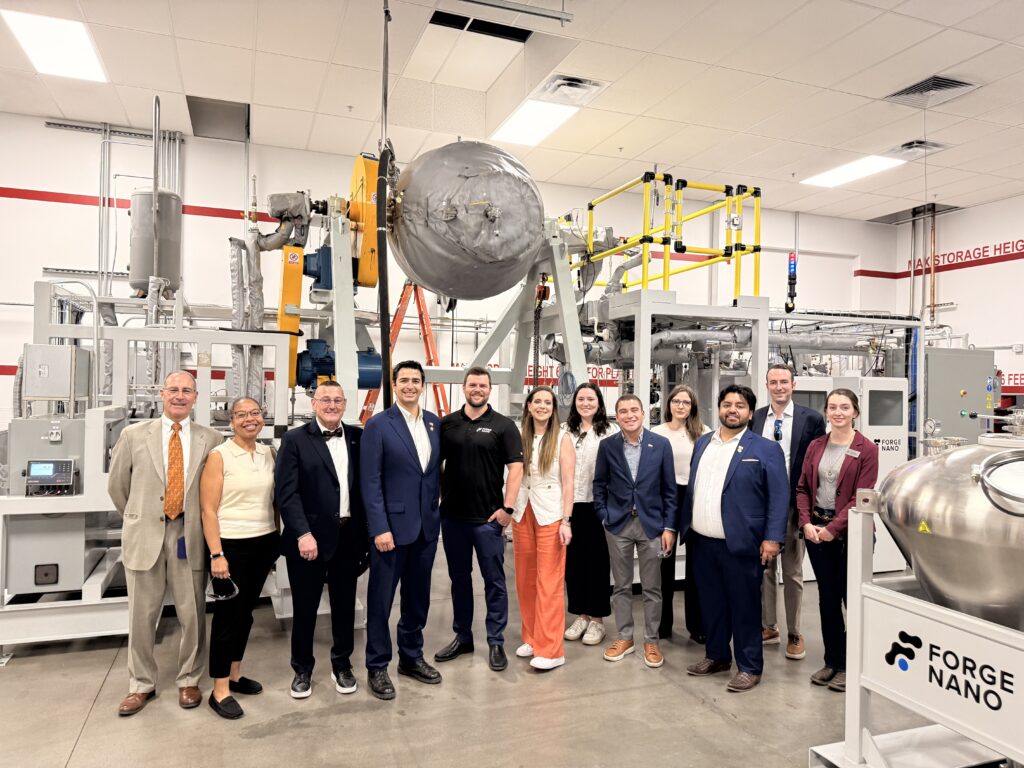
The group next traveled to Forge Nano in Thornton, Colorado, where researchers and engineers are working at the intersection of advanced materials, batteries and semiconductor manufacturing.
Forge Nano’s proprietary atomic-layer-deposition technology creates ultra-thin, highly precise coatings—sometimes applied one atomic layer at a time—that can improve the performance, durability and safety of materials used in batteries, semiconductors, hydrogen fuel cells, pharmaceuticals, aerospace systems and other advanced technologies. The company applies the technology to both powders and semiconductor wafers, engineering material surfaces without fundamentally changing the underlying material.
During the tour, participants walked through extensive laboratory and manufacturing space and learned how carefully controlled environments are essential to producing batteries and semiconductor equipment. The group viewed Forge Nano’s semiconductor cleanroom, for example, where the company manufactures equipment used to apply atomic-scale coatings to wafers.
Forge Nano is also working to build a more secure domestic battery supply chain. At its Thornton facility, the company is producing lithium-ion cells with its atomic-scale coating, using U.S.-sourced materials, for Department of War testing—a tangible example of how American innovation can reduce dependence on foreign-controlled supply chains for strategically important technologies.
That work closely aligns with another bipartisan initiative led by Rep. Evans: the Critical Minerals and Manufacturing Support Act 2.0. The legislation would expand the Section 45X Advanced Manufacturing Production Credit to support additional domestic battery-manufacturing and critical-mineral-processing activities, helping reward production in the United States and reduce reliance on foreign adversaries.
The importance of secure supply chains for critical minerals and advanced materials extends well beyond batteries. These materials are foundational to the technologies that power the modern economy—from grid equipment and energy storage to semiconductors, defense systems and communications infrastructure.
Meeting Rising Demand While Protecting Consumers
The day concluded with a CRES Forum roundtable and reception hosted at Invenergy’s Denver offices. Rep. Evans joined representatives from NLR, Forge Nano, the Western Way, CRES Forum, state and local government, energy producers, manufacturers and developers.
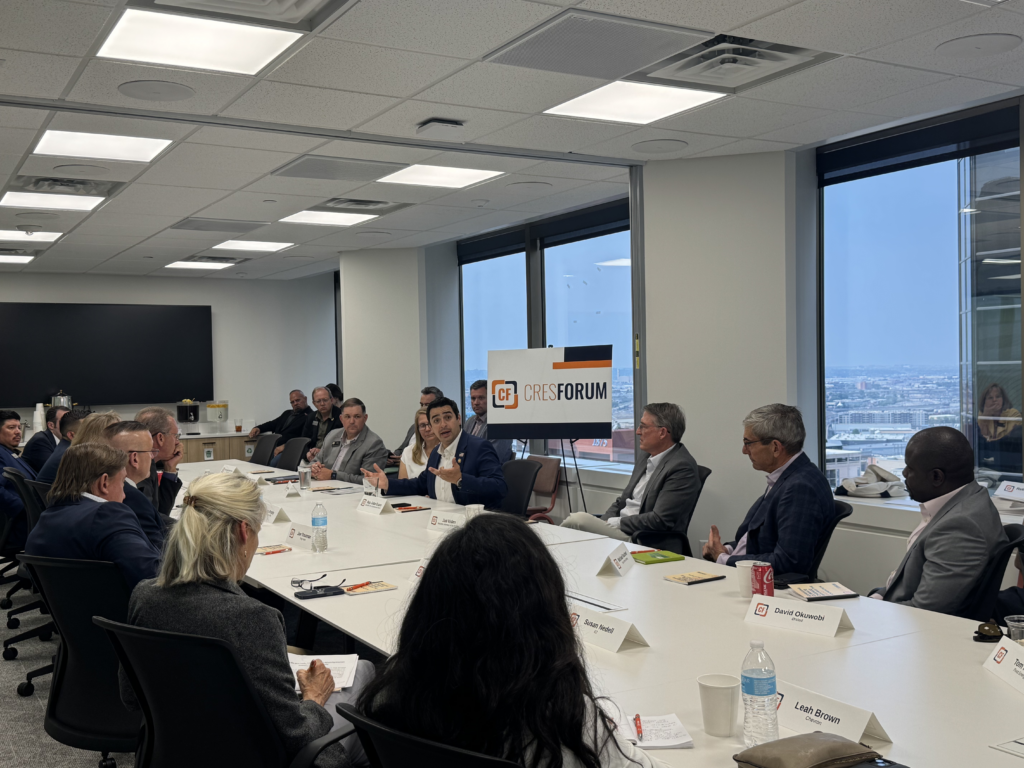
Much of the conversation focused on the rapid growth in electricity demand associated with data centers, advanced manufacturing and broader economic expansion. Participants emphasized that the United States will need significantly more generation, transmission and related infrastructure—and that every energy resource will be needed to meet that challenge.
At the same time, communities should not be asked to subsidize infrastructure built primarily to serve major new energy users. Rep. Evans’ bipartisan Ratepayer Protection Act seeks to address that concern by establishing standards states and public utility commissions can use when connecting data centers and other large-load customers. The legislation is intended to ensure those customers bear the full incremental costs of the generation, transmission and grid upgrades required to serve them, rather than shifting those costs to families, farmers and small businesses.
Participants also repeatedly highlighted the importance of policy and regulatory certainty. Energy projects require significant, long-term investment, and developers need predictable permitting timelines, consistent rules and confidence that approvals will remain stable throughout the life of a project. That certainty is essential to financing and building the infrastructure needed to meet growing energy demand.
Those concerns are central to Rep. Evans’ bipartisan Create Expedited Reviews to Transform American Infrastructure Now (CERTAIN) Act. The legislation would create clearer federal permitting timelines, improve coordination among agencies, and establish stronger accountability throughout the review process, while giving project developers greater confidence in the durability of lawfully issued permits. Importantly, it applies across technologies, reflecting the roundtable’s broad agreement that permitting reform should enable infrastructure of all types rather than favoring one energy resource over another.
The discussion made clear that the barriers facing the energy sector are not merely technological. American companies are developing remarkable tools, materials and energy systems, but their ability to deploy them depends on predictable policy, timely permitting, secure supply chains and constructive engagement with the communities where projects will be built.
Turning Innovation into Energy Security
Colorado offers a compelling view of America’s energy future: national-laboratory researchers modeling threats to the grid and testing the integration of tomorrow’s largest energy users and most advanced energy technologies; manufacturers developing atomic-scale technologies and domestic battery supply chains; and public- and private-sector leaders working through how to build the generation and infrastructure needed to support the digital economy of tomorrow.
CRES Forum is grateful to Rep. Evans for his leadership and participation throughout the day; to the teams at the National Laboratory of the Rockies and Forge Nano for opening their facilities and sharing their work; to Invenergy for co-hosting the roundtable and reception; and to all the Colorado leaders who contributed to a thoughtful conversation about strengthening American energy security, affordability and competitiveness.