
In July, CRES Forum hosted a Cool Conservative Communicators Collaborating on Climate Change with CRES Forum, or “C6WC,” event in the U.S. Capitol building, an event to bring communications staff together to meet, connect and learn more about how to effectively message using “franked” mail to highlight energy issues. The event gathered staff from several congressional offices across the House and Senate to hear from Caleb Smith, President of Drive Public Affairs, on the many ways staffers can better utilize franked communications. Prior to launching Drive, Caleb served Speakers Boehner, Ryan and McCarthy in their respective communications shops.

“Franked mail” is official messaging sent by Members of Congress, to inform constituents on their member’s ongoing work in Washington, D.C. This often includes traditional mail, but also extends to modern technologies like social media, online advertising, radio and even things like billboards.
The term “franked” comes from the Latin word francus, meaning “free,” referring to mail that can be sent without postage. The phrase “to be frank” has the same Latin derivation. Historically, a “frank” was a signature indicating that a letter could be delivered free of charge. Over time, this became the basis for the official communications that Members of Congress can send to constituents at no cost, now known as franked communications.
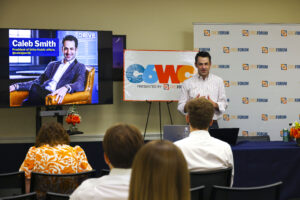
Caleb Smith, the President of Drive Public Affairs leads a team that works with numerous congressional offices to design franked communications, such as ads and emails that explain how member of Congress are representing their constituents. His talk explored various forms of franked communications and how congressional staff could use them, especially to educate the public about the need for clean energy.
Congressional staff can utilize franked communications to explain their efforts on promoting clean energy in many creative ways. Things like postcards, social media and virtual townhalls can all be used to share clean energy tips and resources with constituents. These tools can highlight local projects, explain federal incentives and offer practical advice on lowering energy costs. By combining print, digital and virtual outreach, congressional staff can make clean energy information clear, accessible and actionable for their community.